
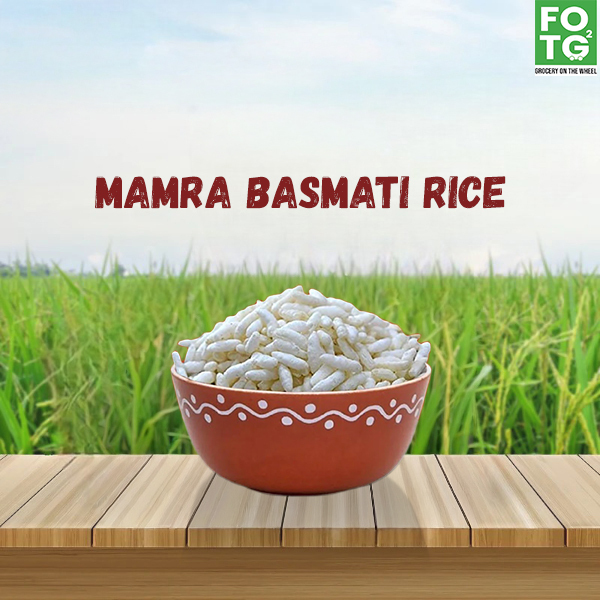
Mamra Basmati Rice 400 gm
Nutrition Facts (Per 100g serving, uncooked)
As a premium long-grain white rice, its profile is focused on clean energy and a lower glycemic impact than short-grain white rice.
| Nutrient | Amount (approx.) |
| Calories | 350 – 360 kcal |
| Carbohydrates | 78g |
| Protein | 8g – 9g |
| Fiber | 1g – 2g |
| Fat | 0.5g |
| Iron | 0.7mg |
| Glycemic Index (GI) | ~50 – 58 (Low to Moderate) |
Key Health Benefits
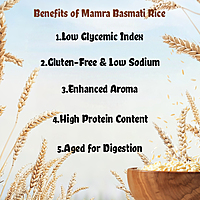
Low Glycemic Index (GI): Unlike standard short-grain white rice, authentic aged Basmati has a lower GI. This means it is digested more slowly, leading to a more gradual rise in blood sugar, making it a "safer" white rice for those monitoring glucose levels.
Gluten-Free & Low Sodium: It is naturally free of gluten and very low in sodium, making it an excellent base for heart-healthy and Celiac-friendly diets.
Enhanced Aroma (Neurological Benefit): The distinct popcorn-like scent of Basmati comes from a compound called 2-acetyl-1-pyrroline. While primarily for flavor, the aromatic experience of eating Basmati is known to be more satisfying, which can prevent overeating.
High Protein Content: Compared to many other white rice varieties, Basmati (especially aged Mamra grades) often contains a slightly higher concentration of protein per serving.
Aged for Digestion: The aging process (12–24 months) reduces the moisture and changes the starch structure. This makes the rice less "sticky" and much easier for the stomach to break down compared to "fresh" or newly harvested rice.