
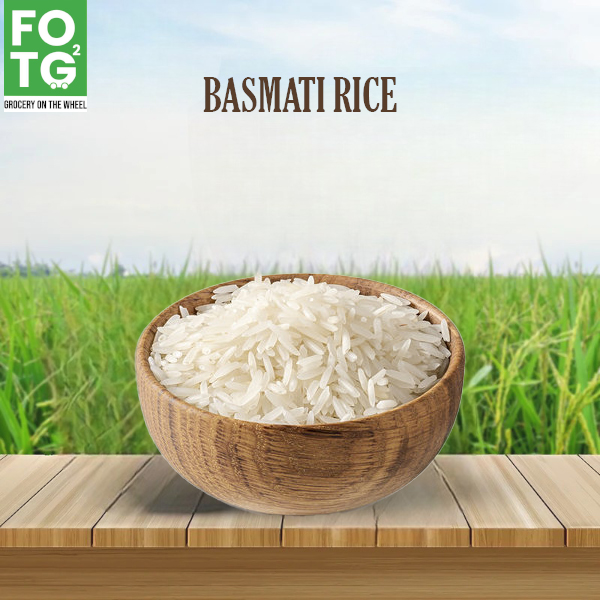
Basmati Rice
Basmati Rice is the "King of Fragrance," world-renowned for its distinct aroma, long slender grains, and light, fluffy texture. Grown primarily in the Himalayan foothills of India and Pakistan, it is unique because the grains expand lengthwise, rather than widthwise, when cooked.
Nutrition Facts (Per 100g serving, uncooked)
Basmati is often considered one of the healthiest white rice varieties because of its specific starch composition.
| Nutrient | Amount (approx.) |
| Calories | 350 – 360 kcal |
| Carbohydrates | 77g – 78g |
| Protein | 8g – 9g |
| Fiber | 1g – 1.5g (Higher in Brown Basmati) |
| Fat | 0.5g |
| Iron | 0.7mg – 1.0mg |
| Glycemic Index (GI) | ~50 – 58 (Low to Moderate) |
Key Health Benefits
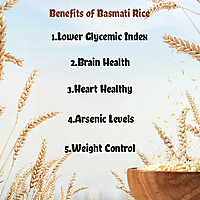
Lower Glycemic Index: Authentic Basmati (especially aged varieties) has a GI significantly lower than standard short-grain white rice. This makes it a better choice for people with diabetes or those looking for more sustained energy levels.
Brain Health (Thiamine): Basmati is rich in Thiamine (Vitamin B1), which is crucial for brain health, focus, and maintaining a healthy nervous system.
Heart Healthy: It is naturally low in sodium and contains zero cholesterol. The presence of unsaturated fats and a small amount of fiber can help in maintaining healthy blood pressure levels.
Arsenic Levels: Interestingly, studies have shown that Basmati rice generally contains lower levels of arsenic compared to other rice varieties, likely due to the soil and water conditions where it is grown.
Weight Control: Because it is less "sticky" and more aromatic, many people find it more satisfying. The presence of Amylose (a complex starch) means it takes longer to digest than "sticky" rice, helping you feel full for longer.