

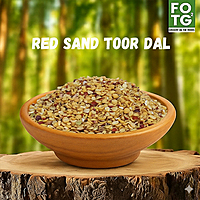
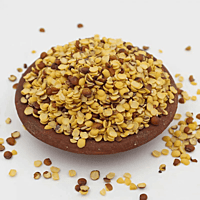
Red Sand Toor Dal 1 Kg
Nutrition Facts (Per 100g, Raw)
Because it is minimally processed and unpolished, Red Sand Toor Dal retains more of its natural B-vitamins and minerals.
| Nutrient | Amount (approx.) |
| Calories | 345 kcal |
| Protein | 22g - 24g |
| Dietary Fiber | 15g |
| Folic Acid (B9) | 460µg |
| Iron | 5.2mg |
| Magnesium | 125mg |
Choose Quantity
Why "Red Sand" Processing Matters
1. Natural Preservation (No Chemicals)
The red clay acts as a natural preservative, protecting the dal from moisture and pests without the need for synthetic pesticides or chemical fumigation. This makes it a "cleaner" and often more organic-aligned choice.
2. Enhanced Flavor Profile
The clay treatment imparts a distinct, earthy aroma (similar to the smell of rain on dry earth) that becomes very prominent when the dal is cooked. It is widely considered the "tastiest" version of Toor Dal.
3. Better Nutrient Retention
Commercial dals are often "polished" with oil or water, a process that strips away the outermost nutrient-rich layer.Red Sand Toor Dal is unpolished, meaning the bran remains intact, providing higher concentrations of protein and fiber.
Key Health Benefits
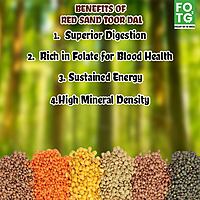
1. Superior Digestion
Traditional wisdom suggests that the minerals in the red clay help neutralize some of the gas-producing compounds in the lentils. Many people find Red Sand Toor Dal much easier to digest and less likely to cause bloating compared to refined, oily versions.
2. Rich in Folate for Blood Health
Like all Toor Dals, it is a powerhouse of Folate (B9), which is essential for synthesizing DNA and preventing anemia. It is particularly beneficial for maintaining heart health by managing homocysteine levels.
3. Sustained Energy (Low GI)
Because it is unpolished, the fiber content is more robust. This leads to a lower Glycemic Index, meaning it provides steady energy for hours and is an excellent choice for managing blood sugar levels.
4. High Mineral Density
The lack of aggressive processing means you get the full benefit of its Magnesium and Potassium content, both of which are vital for muscle function and regulating blood pressure.
Preparation Tip: The "Wash"
Because the dal is treated with soil, you will notice the water turns red/muddy when you first rinse it.
Do not be alarmed: This is just the natural clay.
Action: Wash the dal 3–4 times until the water runs relatively clear. There is no need to scrub it aggressively; a simple rinse is enough to remove the excess soil while keeping the flavor intact.