
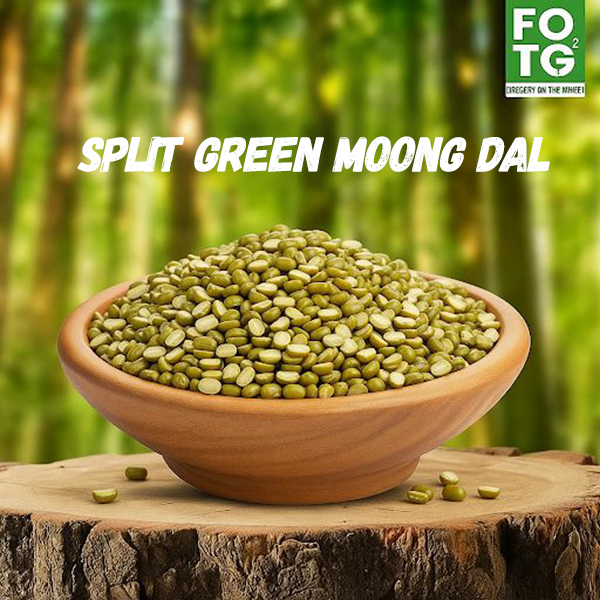
Hand pounded Moong Dal 1 kg
Nutrition Facts (Per 100g, Raw)
| Nutrient | Amount (approx.) |
| Calories | 345 kcal |
| Protein | 24g - 25g |
| Dietary Fiber | 10g - 12g (Higher than polished) |
| Iron | 6.7mg |
| Potassium | 1,150mg |
| Magnesium | 187mg |
| Vitamin B1 (Thiamine) | Higher than polished versions |
Key Health Benefits
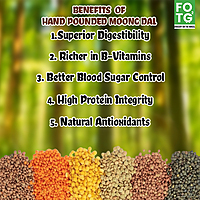
1. Superior Digestibility & "Agni"
In Ayurveda, hand-pounded moong dal is considered the most "Sattvic" and easiest to digest. Because it hasn't been subjected to the high heat of industrial friction, its natural enzymes remain more stable, aiding the digestive fire (Agni) rather than taxing it.
2. Richer in B-Vitamins
The polishing process in factories removes the outer layers where most of the B-complex vitamins reside. Hand-pounded dal retains these, which are essential for nerve health, energy metabolism, and reducing brain fog.
3. Better Blood Sugar Control
The presence of the inner "bran" layers (which are usually polished away) increases the fiber content slightly. This makes the Glycemic Index (GI) even lower than regular moong dal, providing a slower, more sustained release of energy.
4. High Protein Integrity
Industrial processing can sometimes "denature" or slightly damage the protein structure due to heat. Hand-pounding preserves the protein quality, making it more effective for muscle repair and for use in baby food (weaning).
5. Natural Antioxidants (Flavonoids)
The yellowish-green tint of hand-pounded dal (compared to the bright neon yellow of polished dal) is proof of its flavonoid content. These antioxidants help protect the heart and reduce internal inflammation.