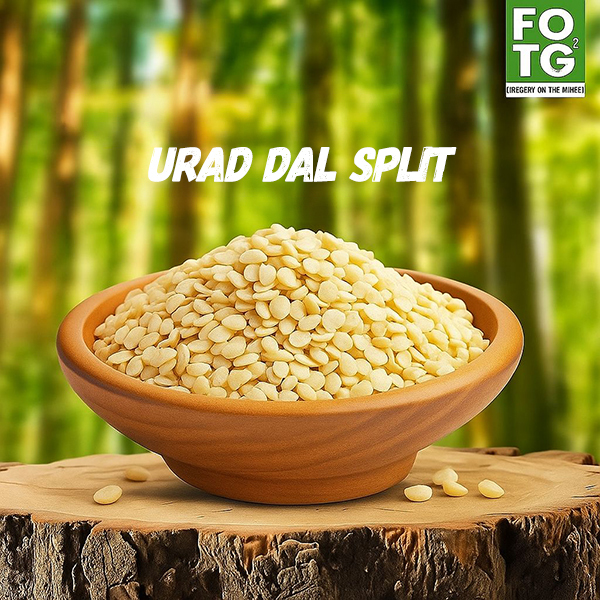
Urad Dal Split
Nutrition Facts (Per 100g, Raw)
Split urad dal remains one of the densest sources of plant-based protein and B-vitamins.
| Nutrient | Amount (approx.) |
| Calories | 341 kcal |
| Protein | 24g - 25g |
| Dietary Fiber | 12g (White split) to 18g (Black split) |
| Carbohydrates | 59g |
| Fat | 1.5g |
| Iron | 7.5mg |
| Magnesium | 267mg |
Choose Quantity
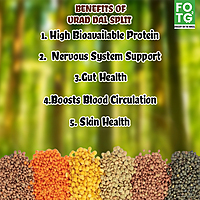
Key Health Benefits
1. High Bioavailable Protein
Because the bean is split, the surface area is increased, making it easier for your digestive enzymes to access the protein. It contains significant amounts of lysine, an amino acid often missing in cereal grains, making it a perfect partner for rice or wheat.
2. Nervous System Support
Split urad dal is exceptionally high in Magnesium and Vitamin B-complex. These nutrients are vital for:
Strengthening the nervous system.
Improving memory and cognitive function.
Reducing "muscle "twitches" or cramps caused by mineral deficiencies.
3. Gut Health (Mucilaginous Properties)
You may notice that split urad dal becomes slightly "slippery" or "slimy" when soaked. This is due to its high mucilage content. This natural substance acts as a soothing agent for the digestive tract lining, helping with acidity and smooth bowel movements.
4. Boosts Blood Circulation
The high Iron and Folate content helps increase the oxygen-carrying capacity of the blood.It is a traditional "strengthening" food given to people who feel physically weak or are recovering from a long illness.
5. Skin Health (Topical and Dietary)
In addition to eating it, split urad dal is famous in traditional beauty regimes. A paste of soaked split dal can help:
Reduce tan and brighten the skin.
Act as a natural exfoliant.
Fight acne due to its antimicrobial properties.